A true error coin was made wrong at the mint: struck off-center, on the wrong metal, with a doubled die or with part of the blank missing. Those can be worth from a few dollars to thousands. Most coins people think are errors are actually damage after they left the mint, and those are worth face.
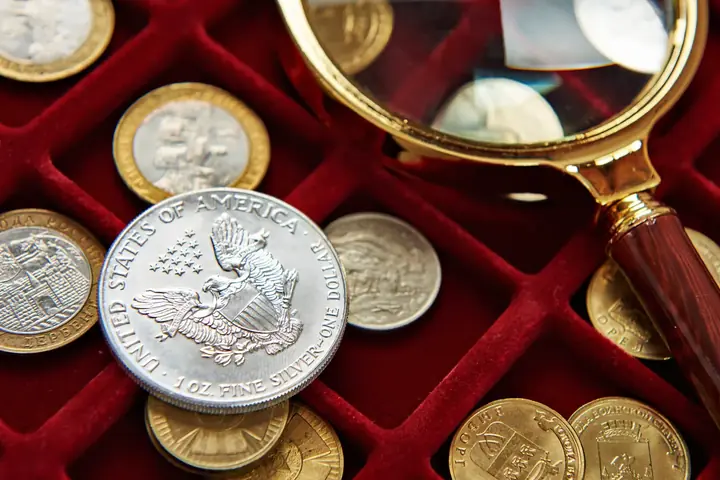
Common real errors
These happen at the mint and collectors pay for them.
- Off-center strikes, where part of the design is missing and the blank shows
- Doubled dies, where letters and numbers show a clear second image
- Clipped planchets, with a curved bite out of the edge
- Missing clad layer, where a dime or quarter shows copper on one side
- Wrong planchet, like a cent struck on a dime blank
- Broadstrikes, struck without the collar and spread wide
What is usually damage
Many coins sold online as errors are not. Coins that were squeezed in a vise, hit with a hammer, run over or soaked in chemicals can look odd. Plating that peeled, scratches that look like doubling and machine doubling, a common flat shelf-like effect, are also mistaken for errors. None of those carry value.
Famous varieties
A few errors and varieties are well known and prized by collectors, including the 1955 doubled die cent, the 1972 doubled die cent, the 1937-D three-legged buffalo nickel and the 2004 Wisconsin quarter with an extra leaf. Each has many fakes, so careful inspection matters.
How to check yours
Weigh it if you can. A cent on a dime blank weighs what a dime does. Look under a loupe for a clean, raised second image on doubling, and for a smooth curve on clips. If in doubt, bring it in. We look at it with you and explain.
A few more answers
Is a coin with no date an error?
Usually not. Most dateless coins wore down in circulation.
Should I get my error coin certified?
Only if we confirm it is a real error worth more than the grading fee.
When you are ready: Old coins and error coins